Pre-Loved Pedestals: Charity-Shop Styling for a Homemade Cake
At Make Me Cake, we are firm believers that a homemade cake should feel like an event, even when the sponge came together in a mixing bowl between school pickup and supper. You do not need a cupboard full of professional props to make that happen. A pre-loved cake stand, a mismatched vintage plate and a clean linen napkin can do more for a plain Victoria sponge than a whole drawer of plastic cake toppers.
That is why charity shops are such a happy hunting ground for home bakers. They are full of glass domes, sturdy pedestal stands, pretty side plates and odd napkins that have plenty of life left in them. The trick is to shop with a baker's eye rather than a magpie's eye, and to style your finds with a little intention. Here is how to build a cake table that looks gathered rather than bought in one go.
Start with a scouting plan
Charity shops reward regular browsing. Pop into your local Oxfam, British Heart Foundation or independent shop when you are already passing, rather than setting aside a whole day for a disappointing rummage. Stock turns over quickly, and the best finds often appear mid-week.
Take a small tape measure and a photo of your usual cake tins on your phone. A stand that looks generous in the shop may be too small for your 20cm sandwich tin, and a dome that seems tall may not clear a layer cake with candles. Check the base diameter, the plate diameter and the height under the dome. If you are buying a stand with a metal stem, give it a gentle wobble. A slight rock is easy to fix with a felt pad; a loose stem or a hairline crack in the plate is a reason to walk away.
Look beyond the obvious cake stand shelf, too. A sturdy dinner plate and a small upturned bowl can become a makeshift stand. A glass cloche from the kitchenware section can cover a cake on a plain board. Odd linen napkins can be hemmed or simply folded generously. Even a pretty teacup and saucer can hold candles or small flowers at the edge of the table.
What to check before you part with £4
First, check the food-contact surface. Chips, deep scratches and crazing, which is the fine network of cracks in old glaze, are best avoided on any plate that will touch cake directly. You can still use a cracked-glaze plate as a base underneath a cake board, or as a display plate for wrapped slices. Just do not serve unwrapped food straight from it.
Second, check stability. A cake stand needs a flat base and a level plate. Put it on the shop floor and give it a light press. If it tips, leave it. If the stem is metal and the plate is glass, look for a clean join with no movement. A little tarnish on a silver-plated stand is fine; flaking chrome or rust around the food surface is not.
Third, check the washability. Glass and glazed ceramic are straightforward. Silver plate may need gentle polishing. Vintage linen should be washable, but check for stains that have set. A napkin with a faint tea stain can still work under a cake board, but it is not the one to drape beside the sandwiches.
Cleaning and gentle repairs
Most glass stands and glazed plates will come up beautifully in warm soapy water. Avoid the dishwasher for anything vintage, hand-painted or silver-plated. For tarnished metal, use a soft cloth and a gentle metal polish, then wash thoroughly and dry well. For glass with cloudy water marks, a soak in warm water with a little white vinegar usually helps. Do not use abrasive scourers on glass or glaze.
If a stand wobbles, cut a small felt pad or a piece of cork to fit under the base. If a glass dome has a chipped rim, retire it from food use or keep it for covering a cake that is already on a board and wrapped. For non-food-contact repairs, such as a loose decorative handle on a dome, a food-safe epoxy can work, but follow the instructions and let it cure fully. When in doubt, keep it decorative rather than edible.
Linen napkins often improve with a long soak in oxygen bleach, followed by a normal wash. Iron them while slightly damp for a crisp edge. If you are not a sewer, a frayed napkin can simply be folded with the raw edge tucked underneath.
Five display formulas that cost very little
1. The birthday brights
Use a plain white or clear glass stand as the calm base, then add colour through the cake itself and a few charity-shop side plates in bright vintage patterns. Scatter the plates around the cake with candles, paper straws or small glasses on top. A folded napkin in a clashing-but-cheerful print ties it together. This works especially well for a simple chocolate or vanilla sponge with buttercream and sprinkles.
2. The afternoon-tea mismatch
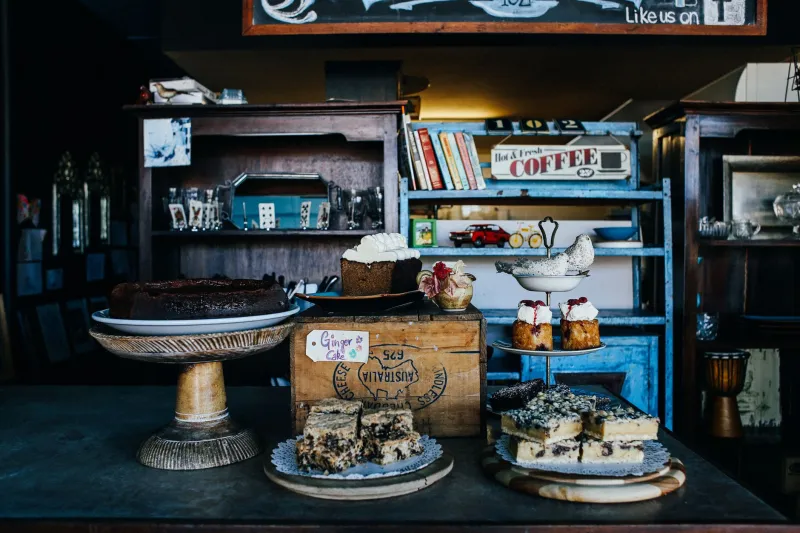
Choose two or three pretty plates in different patterns but similar colours, then stack them on a stable stand or arrange them at different heights using small bowls underneath. Add a doily, a few small cakes or scones, and a teapot if you have one. The look is deliberately collected rather than matching, so do not worry if the florals are not identical. Keep the cake itself simple and let the plates do the talking.
3. The winter evergreen
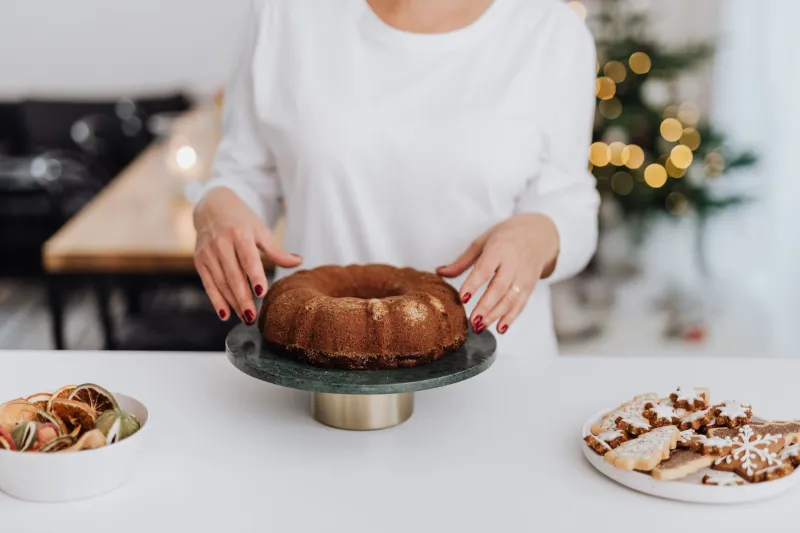
For a November or December gathering, a dark glass stand or a plain metal pedestal looks smart with a homemade gingerbread, fruit cake or spiced loaf. Add a length of linen in a deep colour, a few snips of evergreen from the garden and a handful of berries or dried orange slices. Keep greenery away from the cake itself and use a small dish or wax paper underneath. The result is festive without a single piece of tinsel.
4. The children's-table enamel
Charity shops often have sturdy enamel plates and mugs that can take a bit of knocking about. Use a low, wide stand or even a plain board on a cake tin, then surround it with enamel plates and a wipe-clean tablecloth. A homemade traybake cut into squares looks brilliant here. Add paper napkins and a jug of squash, and you have a party table that feels relaxed rather than fussy.
5. The quiet anniversary
A small plain cake on a simple glass or ceramic stand can look very grown-up with one nice napkin, two forks and a tiny vase of flowers. Look for a stand with a slender stem and a plain plate, then add a ribbon around the base of the cake if you like. This is the formula for a lemon drizzle, a small chocolate cake or a batch of Petits Fours. Less really is more when the cake is the point.
A note on food safety and sensible shortcuts
Always put a cake board or a piece of baking paper between the cake and a vintage plate unless you are certain the glaze is intact and food-safe. Do not use chipped enamel or cracked glaze for unwrapped food. If you are using a dome, make sure it clears the icing and that the cake is completely cool before covering. And if a find is beautiful but not food-safe, use it as a base under a board or as a display piece away from the cake itself.
The joy of the pre-loved pedestal
The best cake tables are not the ones with the most expensive props. They are the ones where someone has taken a little care. A charity-shop cake stand has a story before it reaches your kitchen, and that makes it a fitting stage for a cake you have made yourself. So next time you are in town, pop into a shop or two, measure carefully, clean gently and style with confidence. Your homemade cake deserves an occasion, and a pre-loved pedestal is a very good place to start.