Before the First Whisk: Five Birthday-Cake Questions Worth Asking
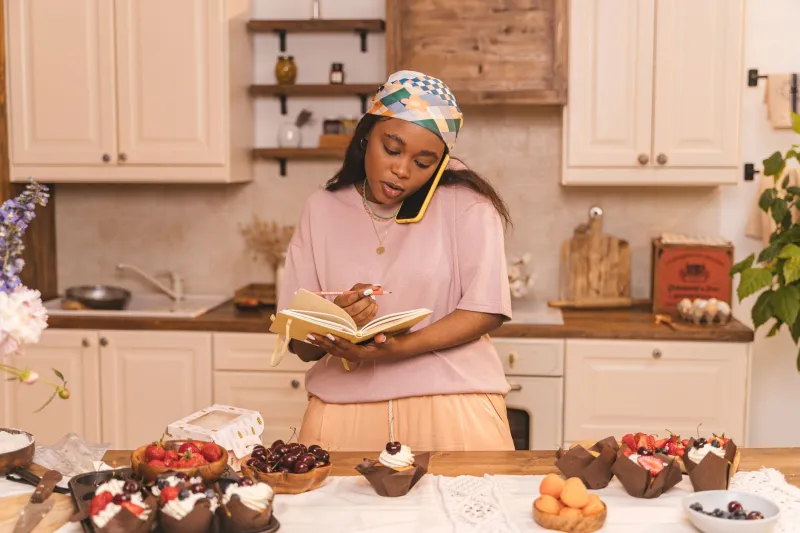
There is a special kind of optimism in agreeing to bake someone else’s birthday cake. You picture a sunny kitchen, a perfect sponge and a happy face at the party. Then you remember that you are not just making dessert — you are making a small, edible centrepiece for someone’s day. That is why the most useful piece of kit for this job is not a stand mixer or a palette knife. It is a short, cheerful conversation.
A quick chat before you shop or switch on the oven can save you from baking a beautiful cake that nobody quite wanted. It also makes the whole thing calmer for you. Here at Make Me Cake, we are all for a bit of cake-related planning, so here are five questions to ask before you begin.
1. What does birthday cake taste like to you?
“What flavour would you like?” sounds helpful, but it can put people on the spot. A better question is: “When you imagine your birthday cake, what does it taste like?” That invites a memory rather than a quiz.
They might dream of a plain vanilla sponge with raspberry jam, because that is what their nan made. They might want thick chocolate buttercream, lemon curd, or a coffee and walnut situation. They might say “anything” and mean it — or mean “please do not make me pretend to enjoy a lavender and blackberry creation.”
Ask about texture too. Do they want a light, airy sponge or something denser and fudgier? A two-layer party cake or a simple traybake? If they are torn, offer two sensible options and let them pick. Write down the answer. A birthday cake is not the moment to test an ambitious new flavour combination on a room full of guests unless the birthday person has specifically asked for it.
2. Is there anything on the guest list I need to bake around?
This is the question to ask clearly and early. Allergies and dietary needs are not an inconvenience; they are part of making sure everyone can enjoy the party safely. Ask whether anyone attending has a food allergy, intolerance or dietary requirement, and whether the birthday person themselves needs something specific.
Do not assume that “gluten-free” means the same thing to everyone, or that a preference is the same as a medical need. Coeliac disease is not a lifestyle choice, and a dairy-free guest may still need to avoid cross-contamination. If you are baking in a kitchen that regularly handles nuts, wheat, eggs or dairy, be honest about what you can and cannot guarantee.
Simple swaps can work beautifully — a reliable gluten-free sponge, a dairy-free ganache, an eggless chocolate cake — but test the recipe before the big day. Keep ingredients and packaging so you can answer questions, and label the cake clearly if it is free from something. If the request feels beyond what you can safely manage, say so kindly and suggest a separate small bake or a shop-bought option for that guest. A good birthday host will understand.
3. How many mouths are we feeding, and how big are the slices?
Portion numbers are where many homemade birthday cakes go slightly off-piste. A 20cm round sponge cut into generous party wedges might serve eight to ten people; cut into modest coffee slices, it can stretch further. A 23cm tin gives you more room, while a traybake is brilliant for a crowd and very forgiving to transport.
Ask how many guests are expected, whether there are lots of children, and whether the cake is the main pudding or one of several sweet things. If there is a buffet, a cheeseboard and a table of party food, people will take smaller slices. If the cake arrives after a light lunch and everyone is waiting for it, they will expect a proper piece.
It also helps to know whether they want leftovers. Some hosts love sending slices home with guests; others would rather not be left with half a cake. Choose your tin size and layer count with the answer in mind, then write down your serving plan. It is far easier to bake a little extra than to explain why the last three guests are sharing a single candle-sized sliver.
4. How is this cake getting to the party?
A cake that looks lovely on your kitchen table can have a very different journey ahead of it. Ask where the party is, how long the car journey will take, and whether there will be somewhere cool to store the cake on arrival.
Buttercream can soften in a warm car. Fresh cream fillings need proper refrigeration. Fondant decorations can wilt or slide in a hot kitchen. If the cake is travelling by train, bus or a friend’s back seat, keep the design simple and sturdy. A flat board, a snug cake box and a non-slip mat are your friends.
Ask who will be carrying the cake and when they need it. If the venue has limited fridge space, plan a filling and finish that will cope. And do check whether the cake needs to be there hours before it is cut — a buttercream cake sitting next to a radiator for four hours is not the same cake you handed over. A quick text to confirm collection time, parking and storage will save a lot of last-minute juggling.
5. What is the surprise-party plan?
If the birthday person does not know about the cake, someone needs to be in charge of the details. Who knows about the surprise? Who is keeping the cake hidden? When exactly should it appear, and who is lighting the candles?
Ask your contact for a clear plan: where you should deliver the cake, who will take it, whether there is a fridge, and what time the reveal happens. If the cake has a message, check the spelling of names and ages — and double-check whether the birthday person is sensitive about the number on top. If dietary needs are involved, make sure the person organising the surprise knows what is in the cake without spoiling the secret.
It is also worth asking about practical party bits: a knife, plates, napkins and a lighter. These are the things people forget in the excitement. A cake can be magnificent and still cause a small panic if nobody can find a candle.
The five-minute checklist
Before you write your shopping list, jot down:
- Preferred flavours, fillings and textures — plus any firm dislikes.
- Allergies, intolerances and dietary needs, including cross-contamination concerns.
- Guest numbers and the sort of slices they expect.
- Collection or delivery time, journey conditions and storage space.
- The surprise-party contact, candle moment and any message on the cake.
Add one extra line for the inscription spelling, because “Happy Birthday, Jo” and “Happy Birthday, Joe” are very different cakes. Once you have the answers, confirm them in a message so you both have the same plan. Then you can shop, bake and decorate with a clear head.
Baking for someone else is a generous thing to do. A few questions first do not make it less spontaneous — they simply make it more likely that the cake lands on the table looking lovely and tasting exactly like a birthday should. Bake it, decorate it, celebrate it.